






































































































































The book The 48-Year-Old Kid revolves around an eventful real life story
-
Khalid M Raza
- May 29, 2026
- 1
- 30 min read


This book, The 48-Year-Old Kid, revolves around a family whose real-life story is interesting. The reality of my life since my childhood and much more. It is more than just a biography of a not-so-ordinary person like me. It might be the first time you have read a biography like this. Beyond everything, it has a unique concept and a clear picture of middle-class life centred on the rich.
My close ones still do not listen to me, and they have already planned everything about who I am today. I am still just a dummy for them, and I am forced to stop making any decisions about building my career, which I must make on my own. Everyone’s career will be built sooner or later, but the ways are quite different, as I wanted more from my creative skills. They still think they are right. And the “they” here refers to my 3 brothers and 2 sisters. Including me, we are 6. I am the youngest. Yes, all my siblings are older than me.
Meanwhile, an expert has already said, “People listen to reply rather than listen to understand.” A company starts its business to make profits, but it also provides employment opportunities.
They try to hire the best staff, and they do not realise that they are giving people a chance to do something, which is their hiring process, and that keeps them going forward. The world has many diseases that make some people corrupt and prone to lying. Some of them are only business-minded. Still, the World is a good place to live if we come forward to help each other and learn from our mistakes.
I learned a lot from my mistakes, but I did not get a second chance, and so every other time I failed. Failures taught me a lot, but my knowledge is still wasteful.
My brothers and sisters wrote the script of my life. I do not care now. I let things come my way, as they used to, so I can accept that my life will be better in time. I also learned a lot from the circumstances, where in many parts of my life, I struggled, abused, harassed and so on. However, I learned from my failures, and my communication skills improved a bit. However, I enjoy writing, and I have worked for many companies where I wrote articles.
My father passed away when I was about a 2-year-old. My Mom brought us all, but her decisions were only up to when I was a mere 15-year-old. From there, my elder brothers and elder sisters took full control of my life. No, they did not harass me except one of my brothers, who used to scold me a lot in my childhood.
I was a bold child until I grew up to be an 8-year-old. My boldness struck badly when I started showing symptoms of depression. He (one of my brothers) is responsible for my childhood depression. However, I studied and worked hard in an uncomfortable atmosphere. I wanted to become a doctor. I was pushed forcibly towards Engineering. Still, my elder brothers and elder sisters never feel guilty even though I was good in my studies.
I will include everything, from my childhood onward, in this chapter-wise book. Yes, it is interesting and a lesson to learn from.
Not that everything in this book includes pointing fingers at my brothers and sisters because I am the youngest. But an old saying in Urdu, which means: “It’s better to be handicapped than the youngest of all”.
At 48, I still feel like an outsider, struggling to connect with my siblings. By calling myself the “48-year-old kid,” I express the ongoing search for acceptance within my own family. Through this book, I invite you to see my struggles and perspectives, hoping my real-life story resonates with you or touches your heart.
I am writing this book to openly share my ongoing struggles and the challenges I face, treating the process as both a release and a commitment. I want readers to understand why I still see myself as a kid at 48, facing battles I must fight alone. Completing this book is urgent for me, as it represents both my journey and my catharsis.
Kids are also welcome to read my book. I won’t finish this book without working hard to write and edit it so it becomes increasingly interesting.
Let us see how “The 48-year-old kid” would be worth reading or not. It is a silent claim that would not hurt the sentiments of my brothers and sisters because what I am writing, one of them knows very well. A hidden journey disclosed for you to read more…
Chapter One: The 48 Year Old Kid
To begin with, it is more about my childhood and my teenage years. In my early school days, for the first 3 years as an infant and then as a child, I was very bold and smart in every action I took part in, whether fighting, teasing, or any other school activities. Not to forget my studies, where I was good enough to impress my teachers.
However, I used to copy one of my brothers, and since I liked his way or style, one could say I wanted to be like him. His face was a bit like mine from all four of the six of us, and so the other four are quite different to each other and to both of us.
Earlier, I mentioned that he was responsible for instilling depression in me during my childhood. Yes, since the age of 8, I was suffering from depression, and I was good in only one subject until class 10. I was harassed, bullied, and troubled. Because I was silent, my classmates used to make fun of me during that harsh period for many years. So many years? Yes, that time was so frustrating, so many years ago to me.
Teachers used to call me dumb. They did not notice my hidden talent. I used to read books like ” How to Make Friends and so on, and was good at creating rhymes and short stories even as a child. Yes, I did not know that I was suffering from childhood depression. But I loved my one angry brother a lot, even though he used to scold me furiously and frequently. I tried my best to live, to be comfortable with him.
Amazingly, I was good at chess, which was the only reason I lived. Suddenly, after reaching class 10, I started working hard, and I achieved very good scores in the 10th standard. From here, ever since I was in class 6, I decided to become a doctor; it was my ambition because I used to see my mother suffer from various ailments, and it was my childhood dream. Also, because my other brother, who used to like me a lot, started studying medicine to become a doctor. I thought that at that time his books would help me study more easily without having to purchase medical books anymore.
But all my brothers and sisters were opposed to my decision to become a doctor. They thought I was the youngest, so it would be good if I could enjoy my life while studying engineering. They took me wrong. They thought medicine was tough, but I was very good at Physics, Chemistry and Biology. Math was one, so bad for me, a subject that I later mastered to get a good score for admission in a very good Engineering college. So, nothing was impossible for me as a student; I mastered any subject during my youth.
When I was so desperate to fulfil my dream of becoming a doctor, my siblings did not listen to me. They forced me towards Engineering, which still hurts me a lot. However, a second wave of depression hit me hard after I got a good rank in the entrance test to study Engineering.
The depression crept in because I used to spend 20 sleepless hours in my studies every day. In the meantime, my brother, who was a medical student, used to tell me, “Don’t worry, it’s examination tension,” whenever I told him I was not physically or mentally fit and could not speak to anyone for more than a minute. They ignored my difficulties, and I was left alone. However, my past and present are very intimidating, though everything of the past is history now.
I found my first friend when I was four years old (my siblings kept reminding me about her). However, I still could not figure out whether I had fallen in love with her, but I used to visit her home with her after school. As I grew a bit older, and so all the time, my siblings, other than my angry brother, kept reminding me of my childhood affair, which was nothing but pure friendship. Yet, as they kept reminding me, I felt a little bit like a fun-loving person.
The school was near both my home and hers. It was a nice time for me before my childhood depression, which haunts me a lot. At age 6, I was moved to another school, where I did many naughty things. I was the subject of everyone’s attention, including my teachers. I was very strong in my childhood, before age 8. I had to go to school with my two other brothers by bus until I was 8.
Thereafter, I was afraid to go to school alone by bus. I used to stand at the bus stop for an hour or two, missing buses one by one. And then I used to return home after learning that my eldest brother had left for college. I did so by knocking on the window at the back of my mom’s room. And I used to ask her: “Is he in or gone, Mom?” She used to say, “Yes, he left.” So, I used to go into the home and have whatever fun I could. But it looked boring for me every other time after a few days spent this way.
I then resumed going to school, and this used to happen not so frequently. It was obvious because I was still in mild depression, and I could not find peace during that time or a way to stay at home all the time.
However, I started taking my studies seriously when I turned 14. From there, I was desperate to become a doctor. I worked very hard. Although at that time, I was appreciated, and at that moment, I still had depression. I hesitantly asked my friend, after checking the result, how we should celebrate our success.
He was happy that he also got first-class marks, and he was also my neighbour. As he told me to run, I ran back home, and I ran very fast to tell my family members that I got first class in the 10th standard’s final exams. But when I got home, my eldest brother was so happy for me, and a few days later, one of my elder brothers got a very good rank in the entrance exam to study medicine. He was the one I mentioned earlier, whose books would help me cut some expenses. All were so happy for him and celebrated a lot.
Many guests visited our home. They noticed that I was (while in depression), so silent during that time, which went wrong and had put me to look sad for what I was feeling, just nothing, not even like a spectator or a not bad listener, and nothing worried me more than how I was unable to express my joy over my brother’s success. But that news had already spread among my neighbours and relatives a few days earlier, when I ran towards my home after checking my 10th standard result. This made all others concerned about my selfishness rather than thinking that I was just about a 16-year-old and had some serious health issue.
How come that? Yes, they were wrong because they misunderstood me. My brothers and sisters also misunderstood me, thinking I was happy for my own success and not for my brother’s.
My brother, the fourth child of my parents, went on to become one of the best doctors, according to my wishes and my prayers for him, and still is a lot for him. He has reached new heights, and he also loves me back. Once, he was hospitalised due to appendicitis, and I did so much good care of him because of my love for him, and he realised that, and with him, it is a two-way love, but much more from me to him.
Earlier, a bit long back during my childhood, and to bring it again, in this topsy-turvy truth disclosure, I studied much better in the 7th standard exams. During my English exam, I was given a seat in the sun. I felt something very uncomfortable, and I completed my English exam. However, I went home while tears were flowing from my eyes, or you can say I reached home in a state of worry after my English exam.
My siblings thought I did not do the exam well, instead of asking me in any other way that could help them understand exactly what happened. But they told me, “Don’t worry.” Also, they told me it was just an exam and that it would be written again. As I was in mild depression, I could not explain them or clear their doubt. They (siblings) were in a state that was enough for them to let me mind my own business, and they used to think that I was not good at my studies.
The results for my 7th standard have come out, and I scored 78% in my English exam, which they did not realise. As I mentioned above, I went home after writing the English exam in tears because of the heat, as I had written it under the sun. They felt I was worried that I would fail in the exam. It did not happen as they expected, as I got a good score on the exam.
That period of my life passed away, and my brothers and sisters used to have group discussions in one room.
One day, my brother hit another vehicle, which was an accident caused by rash driving and my brother, the third child, and my elder brother started acting. I was stunned and clueless; I was so shocked that I cried, and my tears of love flowed for him even though he disliked me, and I was just a 9-year-old. A few minutes later, I was told not to worry. I then felt a bit at peace within a minute, as my elder, angry brother convinced me that he was acting only to avoid being blamed for rash driving.
I then started escaping silently from coming in front of my angry brother’s friends because they started teasing and mocking me right after that accident. They repeatedly keep saying, “your brother (angry one) fell in the pit.” “Your brother (angry one) fell from a building,” and so on. Thus, in this way, my escape from challenges developed, and I would hide outside or inside my home whenever guests visited our home.
Before entering their room, where they used to discuss and have fun, I always wondered whether I should join them. I used to wait for a couple of minutes at the door, hesitant. They knew that I was just at the door, and they kept saying, “Look, he’s listening quietly to what we’re discussing.” Later, I realised that not even the youngest child like me would be spared if things went badly; then everything would go badly. This used to hurt me a lot. I was left isolated from all five except my mom.
I endured a lot of pain during my childhood because I could not say a word or two, which kept me hurt as I could not speak or be a part of group discussions. There were a lot of incidents, where sometimes I was happy, and sometimes I was abused and left alone. I started counting the days, one after another, to grow up. At present, I still think I am a 48-year-old kid. It is always a do-or-die situation for me.
I am working on bringing joy into my life, which would be my close ones’ defeat over what they think about me. That is not shrewd because I do not have to prove them wrong, but at least they should understand a bit about what I am up to. Nobody can look inside the heart of anyone to know how they are; “good, intelligent or correct.” My point here is that at least people should know that if a man fails a subject once, then, if he works hard, he can pass it on his second attempt.
My close ones, including my siblings, never understand that I used to learn a lot from my mistakes. They live in the past. I do not blame my past because of that, I am writing this book to learn and move forward. I do not care if this book fails to impress my readers, as I believe I have another chance to write a better book than this one. However, I am enjoying the time I am spending writing whatever I truly remember.
As early as I turned to a 14-year-old, I found myself in frustration in front of the mirror. I saw my thick moustache, and I was shocked to see that, because of my depression, which made me think something strange about myself.
Straight away, I plucked my moustache away. I was in a sorry state or a state of bother. I thought: “How come I have become old? What is the reason for me to leave my childhood without enjoying much of my childhood days, where, how and when I wanted to grow up? But not this way, how could I live, looking matured and with nothing for my tongue to move in front of others.”
I needed to figure out what the next best thing to do was. So, I started working harder in my studies.
Chapter Two: Youth Days
Some more about my youth days, where I was told to enjoy my life as much as possible. This was because I suffered severe depression while I was about to do Computer Science engineering. A severe headache caused me to shout loudly and in full, and in huge pain without a bit of ease, because it was uncontrollable for anyone, too. I never thought of committing suicide, even though the pain was unbearable.
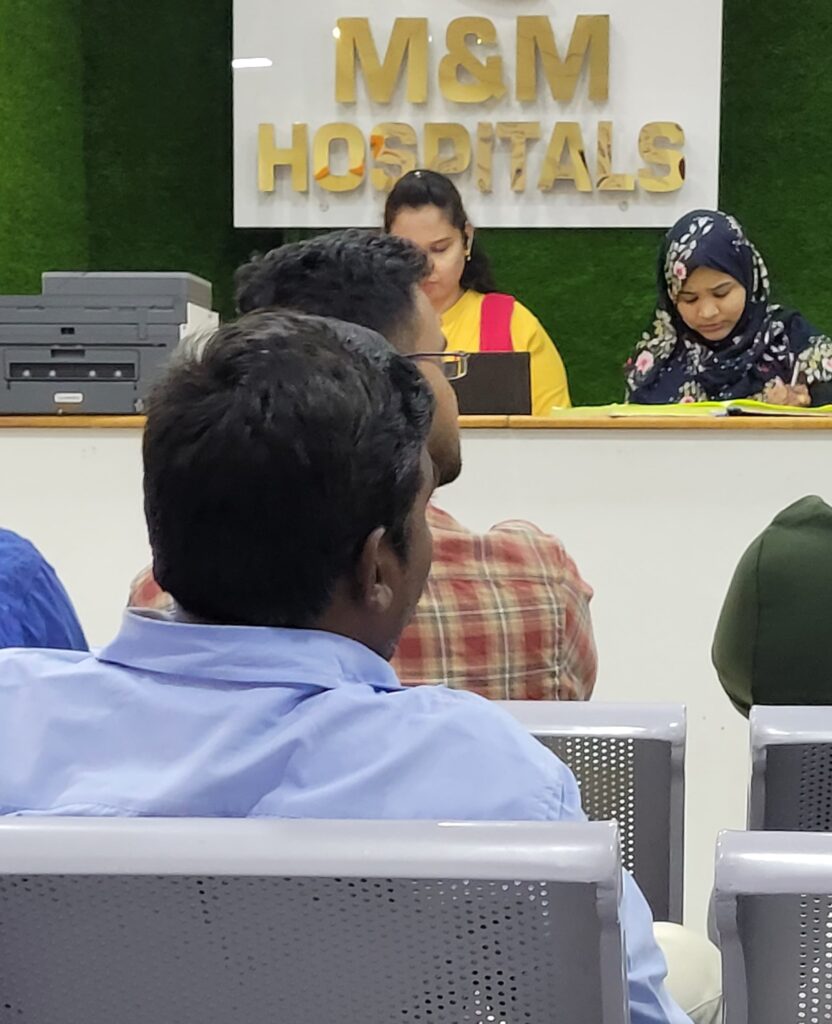
In any case, there is a treatment for every kind of disease. Fortunately, I was admitted to a hospital, and I was recovering slowly. I learned to live since I was on medication, which kept me drowsy until the afternoon every day. However, I used to wake up early in the morning and take a bus to my engineering college to attend classes in computer science.
In the classroom, while the lecture was going on, I used to yawn a lot due to drowsiness. So, I slowly used to leave the class and go up in the terrace of my college. So, there I used to sleep.
This used to happen for months and my exams used to be missed because of shortage of my attendance. I was demoted to repeat my first year of engineering. I realized, I must work hard. And for working hard I want something good for me in my engineering college to encourage me attend classes and resume my studies. So, as I was in medication, I told few engineering classmates one after the other. I told each one that be friends with me so that I would come college regularly and work hard.
It sounds weird to me now, which I told them. Yes, they also found it weird at that time even though I realized very late that I wanted to make a friend just to attend college and work hard in my studies, which then each student I spoke to thought that as weird and they laughed at me.
I was a kind of youngster in my engineering college, who was forced to study engineering without working hard in studies. It means that I wanted to do medicine, but I was forced in engineering while I was also told to enjoy. How come, I enjoy my life; when I used to see my classmates studying a lot. I knew they were writing internal exams very well and I was also unable to submit the assignments. I was just confused.
Later, a girl appeared in my life. She fell in love with me and I was experiencing the true joy of an intimate relationship. I thought I would marry her soon. But, at that time it was too early and her parents also liked me. Time was so good that after a dignified love affair for 4 years. The parents of the girl informed me through my uncle. I just ignored to what they wanted to tell me. Yes, they had come up with a marriage proposal. I was forced to deny that for some reasons. Another sister, who was just 1 year older than me was not yet gotten married.
It was brutal for me to think about marriage at that time. She left me and her parents married her to someone else. I wrote a letter and kept it in wallet. In which, I wrote that how she ignored my love and so on. I tried to say that when she stopped meeting me after promising me that she will marry me only. She was right and she did right. But. I blamed her in my letter, that I wanted to hand it to her sooner or later. One of my brothers read that letter and mocked at me. The game is not yet over then.
I was deeply in pain, just because the brother, who used to scold me a lot, mocked at me because he noticed only the one side of the coin. I started concentrating in my engineering studies. The letter to her delivered not. It was so intense stories had come one after the other with multiple girls thereafter.
Nevertheless, I joined a medical institute Kaplan which teaches doctors to pass USMLE for USA, I was a librarian. My work was so good and my employer liked it so much and I was happy working for Kaplan.
Later, in 2006, I started a unique footwear business, offering shoe repairs and cleaning along with some footwear sales. Footwear services for other businesses, such as hotels, used to bring in good profits for me. The idea clicked, and it was successful. But the location must be changed because of a one-way road. It was not of any interest to my close relatives because I studied engineering earlier.
So, to do well in my business field, I went to the UK to study business management and wanted to gift my business to one of my brothers to manage it while I was away or in the UK. He showed no interest in my offer. I must limit my business for my cousin as he was interested in operating the business on a door-to-door service. Yes, I went immediately to the UK in 2010 as soon as I got my student visa. There, I worked very hard in my studies.
In the streets of a small town in India, where the air was filled with the scent of monsoon rains and street vendors like chai and samosas, I entered the world as the youngest of six siblings. I was the unexpected gift, or perhaps the burden, to a family already less careful about my future. My father, a CTO in a government office, was a man of immense dreams. He had foreseen a future where his children would rise above the modest life he led, breaking the cycle of quiet desperation that had defined his own existence.
Fate, that was so cruel, had other plans. When I was just two years old, my father passed away suddenly from a heart attack. His details are in-depth to me even now, and the stories told by my mother and siblings over the years.
He was in great pain one evening after returning from work, his face etched with pain, and was holding me on his shoulders. By the time he was rushed to the hospital, it was too late.
The void left by his death was immense, a hole in the matters of our family. My mother, a homemaker at the time, became the sole pillar holding us up. She was a homemaker by circumstance but a warrior by nature. With five children already, three brothers and two sisters, and now me, the baby of the family, she took on the business of a poultry farm alongside the government pension.
Our home was a modest two-room affair, with peeling paint on the walls and a leaky roof that turned every rainstorm into an adventure. We shared beds, meals, and dreams, but mostly, we shared survival.
The Shadow of Absence: Chapter 3
As the youngest, I was lively in those early years. My siblings, ranging from one to 10 years older than me, treated me like a living doll. My eldest brother, who was already in his teens, would carry me on his shoulders during festivals, showing me off to the neighbours. My sisters would sing lullabies and feed me a spoonful of rice pudding.
The middle brothers were more playful, teasing me gently but always with a protective edge. And then there was my mother, whose tired eyes held a world of love. She would tell me stories about my father, a writer who had gone to a better place.
But childhood innocence is fragile, and mine began to crack early. By the time I was five, I started noticing the tensions simmering beneath the surface. Money was always tight; arguments over bills and school fees echoed through our thin walls.
My siblings did not do part-time jobs. The eldest jumped to college, and the burden was too much on my widowed mother. Life moved on, but the shadow of my father’s absence loomed large, shaping us in ways we could not yet understand.
I was a bold child, or so they say. From the ages of three to ten, I was fearless, a whirlwind of energy bounding through the neighbourhood, climbing trees, and challenging older kids to games of cricket. My mother often recounted how I would stand up to bullies twice my size, my tiny fists, declaring, “I’m not afraid of you!” Laughter would follow, and the older kids would ruffle my hair, amused by the pint-sized warrior.
School was my playground. I started at a local school, with overcrowded classrooms and teachers who wielded canes like extensions of their arms. But I thrived there. My grades were excellent from the start; I had a knack for memorising poems and solving math problems that stumped my classmates.
Teachers praised me, calling me “the bright one.” At home, my siblings encouraged my studies, seeing in me the potential to fulfil the dreams our father had for all of us.
But boldness has its enemies, and mine came from within the family. My mother’s third child, my elder second brother, a few years my senior, was different from the others. He had always been the hot-tempered one, quick to anger and slow to forgive. Perhaps it was the pressure of being sandwiched between more successful siblings. Whatever the reason, he targeted me. It started small: scoldings for minor things, like spilling milk or making too much noise.
“You’re nothing but a nuisance,” he would snap, his voice laced with venom.
By the time I was eight, the scoldings escalated. He would yell at me in front of the family, belittling my achievements. “You think you are smart? You are just a kid who does not know his place.” Physical punishments followed by slaps for talking back, being locked in a room for hours.
My other siblings dismissed it as “tough love,” saying he was just trying to “discipline” me. My mother, exhausted from her daily struggles, intervened when she could, but her authority faded as my siblings grew older and more attentive.
At 8 years old, the boldness shattered. The constant barrage wore me down. I began withdrawing, spending hours alone in a corner of the house, staring at the walls. Sleep became tough; nightmares of one angry face haunted me.
Depression crept in like a thief in the night, the symptoms I did not understand then: loss of appetite, irritability, a pervasive sadness that made even playing cricket feel like a chore. I would cry silently at night, muffling sobs into my pillow, wondering why I was so unworthy.
My mother noticed first. “What’s wrong, my son?” she would ask, stroking my hair. I would shake my head, too ashamed to voice the pain. The family doctor, a kind old man, diagnosed it as “childhood blues,” prescribing tonics that did little. No one connected it to my angry brother’s behaviour; in our culture, family matters stayed within the family, and elder brothers were to be respected, not questioned.
Until I was fifteen, my mother held the reins of our family with quiet determination. She made the decisions: what we ate, who went to which school, how the savings were allocated. Her word was law, born of necessity and love. Under her guidance, I continued my studies diligently, despite the depression that lingered like a fog. I excelled in subjects like biology and chemistry, dreaming of becoming a doctor.
“I’ll heal people,” I would tell my friends, inspired by the doctors. “I’ll make sure no one loses their loved ones too soon.”
My siblings, now adults, were building their own lives. Elder ones got married. Things followed suit, the two sisters were also married off. Angry one brother, however, remained at home, unemployed and bitter, his temper was as usual a constant storm and still he is that way now.
When I turned fifteen, everything changed. My mother fell ill. The family rallied, but in her weakness, the power shifted. My elder siblings took control. “We’ll handle things now”, they said. Decisions about finances, marriages, and education became collective, but really, they were dictated.
For me, this meant the end. My dreams were scrutinised, debated, and ultimately discarded. “Doctor? That is too expensive,” they declared during one family meeting. “Engineering is practical. It guarantees a job.” I protested, and my voice was trembling. “But I want to help people, not build machines.” My mom said. “Listen to the kid. He thinks he knows better.” This great voice went in vain.
High school was a battleground. Despite the depression, I studied hard, scoring first-class marks in my 10th standard exams. The day the results came out, I was confused. “How should we celebrate?” I asked my friend, my heart pounding. “Run home and tell everyone!” he laughed. So, I did, I sprinted through the streets, wind in my hair, joy bubbling over. For a moment, the shadows lifted.
But joy was short-lived. A few days later, my brother, the fourth child of my parents, aced the medical entrance exam. The house erupted in celebration. Guests poured in, bearing sweets and congratulations. I stayed quiet, not out of jealousy, but because the depression had flared up again, his latest excitement had left me nothing with. “See? He did it. You are just a dreamer”.
The guests misinterpreted my silence. “Look at the little one, sulking because his brother succeeded,” one aunt whispered. It stung. However, I had prayed for his success every night, kneeling before God, “Let him be hugely successful. I would whisper, even if I cannot.” Misunderstandings piled up, reinforcing my status as the “troubled kid.”
Forced into engineering prep, I was enrolled. The subjects, mechanics, circuits, and the like felt alien. I struggled, not from lack of intelligence, but from lack of passion. Depression deepened; I isolated myself, finding solace in writing. Secretly, I would write down stories and poems in a notebook, pouring out the pain I could not voice.
College years were a blur of mediocrity. I graduated with average grades in 1998 and landed a job at a small IT firm. “See? We were right,” the eldest brother said proudly. But inside, I seethed. No guilt from them, no acknowledgement of my sacrificed dreams.
The new millennium brought changes, but not freedom. At 23, I was still living at home, my salary funnelled into the family pot. My siblings rejected my marriage proposals; they did not like my wife, a kind woman from a “suitable” family. I married in June 2005, and she became my favourite friend, understanding my struggles.
Career-wise, I bounced between jobs—IT support, content writing for websites. My communication skills shone in writing roles; I crafted articles on technology, health, and even on fiction. Editors praised my creativity. “You’re a natural,” one said. But at home, control persisted. “Quit that unstable job,” someone advised, ignoring my pleas for independence.
Angry one brother’s abuse continued, verbal now, mocking my “soft” career choices. “Real men build things, not write fairy tales.” Depression waxed and waned; therapy was dismissed as “Western nonsense.”
I vowed not to control my daughters, as I had been. But family interference extended even to them: “Send them to a good school,” a few insisted.
By my forties, resentment annoyed. At 48, I still felt like a kid; decisions about my home, finances, and even vacations were dictated by siblings. “You’re the baby; we know the best for you,” one sister would say affectionately, but it rubbed off.
Yet, positivity emerged. Good friends, now successful businessmen, encouraged me. “You are intelligent, creative. Write your story.” I did, starting this book. Tears flow as I type, but it is releasing. I have worked for companies, writing hundreds of articles. My communication skills opened the doors. Abuse persists, but I do not care. I let things come, believing life will improve.
This book is not about blame. It is about resilience. The Urdu saying rings true: better to be handicapped than to be the youngest. But I am claiming my narrative. Kids, read this, learn to voice your dreams.
The hidden journey is disclosed. From bold child to depressed teen, forced paths to self-acceptance. Siblings scripted my life, but I am rewriting the ending.
Expanding on that misunderstanding: I prayed for my doctor brother more than myself. His success was mine too. But labels stick.
At 48, I still struggle for their loving hearts, but I have found just mine. This piece is my silent claim: ‘Truth without weight’.
Note: This article, written by Khalid M. Raza and published on Tumido News, aims to help readers understand the real events and sad celebrations. All written content here is of the writer’s opinion, and if you have any questions, please leave a comment. All content on Tumido News is for the information and knowledge of our esteemed readers. Feel free to ask.


Zohra Shaik
29th May 2026Raza, this was a powerful read. Thank you for sharing such an intimate story about yourself. It’s so unfair what you had to go through. I wish you had become a doctor. I am sure you’d be helping so many people but fear not , I am sure you are helping them with your stories too! More power to you. May Allah bless you, your wife and your daughters.